2025 was the year I discovered I really like to explore castles, and read about history and local lore. I loved these types of activities when I was younger, but over the years I didn’t make time for it. Luckily, this year brought it all back.
It was also the year I published my first novel, and edited and shaped my second poetry collection that will be out in the spring. I was able to stick to a writing routine that worked for me, and arranged my office so it really was a room of my own that I enjoyed working in. I call it my “everything room.” It has my stationary bike, my guest bed, my desk, and a wall of books.
I took a floatplane for the first time to Salt Spring Island in April. When I took it again in November, I felt like a pro! There was something special about stepping down from a small floatplane onto a dock and being right in the harbour of quaint Ganges.
Inside Edinburgh Castle
But let’s start from the beginning…
Writing
Once I became a mother all those years ago, I felt a large shift within me. I was responsible for someone so small, so young. Minutes old, days old, months old. It was then I felt that life wasn’t this long journey, but something that was finite. It was with the thought of finiteness that I started to take my own routines and ambitions as a writer seriously. This could have also been that as a new mother, my focus areas changed and I didn’t have as much time to work on my writing. That made a sustainable writing routine all the more important.
This is to say that I am happy to report that I kept my writing routine going in 2025, well pretty much. I engaged in both the substantive and copy edit of my next book, Beautiful Unknown Future and worked away on the draft of my next novel. The substantive and copyedit of Beautiful Unknown Future was a great experience. I worked with poets Stephen Collis and ryan fitzpatrick. They both read my manuscript with care and gave me valuable feedback.
The publishing of my first novel took happened in April 2025, and it was quite surreal. I did some readings and book signings, and took part in a panel at the Fraser Valley Writers’ Festival (hosted by the University of the Fraser Valley). It was so much fun!
Jen Sookfong Lee, Nick Thran, Heather Ramsay, me, and Kayla Czaga after our panel on the theme “Sound.”
Travel
Travel began in 2024 and continued into 2025, with a dream trip to Scotland, England, and Ireland in the spring. We took trains, planes, and Ubers. It was so much fun. I soaked up the history and enjoyed trying new food and explored so many amazing shops and bookstores.
Closer to home, the travel experiences continued with a family trip to Victoria where we had a great time enjoying the ferry, the views, and quaintness of downtown Victoria.
I also ended up on Salt Spring Island not one but twice. It’s a beautiful little spot.
Provincial Legislature in Victoria.
Next year
With a new year just around the corner, I’m looking forward to bringing much of what worked well from 2025 forward. This means keep a writing schedule and being gentle with myself if I can’t keep it up sometimes. There are seasons for generating and there are seasons for rest and reflection, this I’ve learned all too well over the years.
I’ll be happy to launch my new book in the spring, and hopefully finish up my novel project. Perhaps there will be a few special travel experiences as well. Oh, and I’m sure I’ll read a bunch of great books.
The following essay appeared in the summer 2025 edition of WRITE magazine.
When my daughter and I visited an eerily empty mall when she was a toddler, she did something wonderful: she started joyfully running. Suddenly, the cavernous corridors of the empty mall became a much-needed playground on a rainy day.
Once I caught up with her, we walked hand-in-hand through the hallways of the mall, past the shops and food court restaurants, and alongside the thick maintenance doors that remained firmly shut to the outside world. Many of the stores in this mall sat vacant with yellowing paper covering their windows, so it was no wonder few people were there that day. We were drawn to the indoor space, but as we walked along more and more empty storefronts, I couldn’t shake the feeling that dead malls were creepy.
My first jobs as a teenager, then later as a university student, were in malls and they’re spine-tingling places after hours. Loading bays with janky doors, dark and windy maintenance routes, shadowy corridors, and, yes, small furry creatures scurrying about. I worked at sporting goods stores and home stores, and I remember the chill that ran down my spine as I walked alone through the parking lot each night to toss the garbage in the dumpster and how the rattle of the heavy lid slamming down echoed through the darkness.
While my daughter and I wandered, the dead mall as a mysterious setting got my imagination going. Was the fading mall with a high vacancy rate kind of gothic?
An old castle or a crumbling mansion. A woman in distress. A paranormal vision (or two), and the dangerous secret shrouding the mystery behind it all. The elements of a gothic story have haunted the pages of novels for hundreds of years.
Could a mall become one of those elements too?
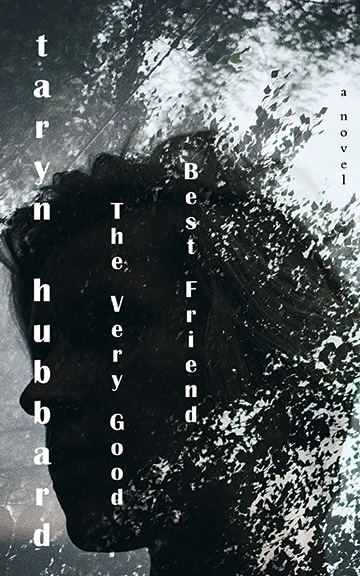
When I set out to write my debut novel, The Very Good Best Friend, the dead mall became more than just the chilling contemporary gothic setting for Carolyn’s journey from uptown New Westminster to an imagined town in the East Kootenays called Valley Falls. I began to see how the mall was not only a setting I found engaging but a vehicle to explore themes of generational wealth, grief, family history, and friendship. The abandoned mall Carolyn is searching for has been reborn as a mysterious intentional community run by a billionaire where all community members have the gift of student loan forgiveness. The catch is, they must work at this hidden mall under mysterious circumstances and go no-contact with all outsiders.
Along the way, Carolyn is confronted by ghosts of her own that she must face to make way for her growth. When she begins seeing something important from her past, she presses through the vision to focus on finding her friend. However, she can’t run from what she’s seeing, no matter how many crumbling mall corridors she passes through.
It wasn’t until the second or third draft that I even realized I was writing a contemporary gothic novel. Those first drafts were about getting the journey down on paper and the traces of a story arc. My more tactile memories of the mall all added to the atmosphere of the setting as I wrote: windy maintenance routes that were easy to get lost in, huge, wrap-around parking lots that went on and on, and the tacky mall décor that was always covered in dust. These details added the texture and nuance I needed to make Carolyn’s exploration of the mall authentic and spooky. Animals lurk in the rafters and decades old food court menus untouched by inflation litter the floors.
Even though I found old dead malls creepy, remembering the joy of my daughter running and using the empty space of the mall stayed with me as I wrote. If an empty mall could be a modern day stand in for a haunted castle in a contemporary gothic, then maybe it could also be something else, something more, and that “something” is what I set out to discover in The Very Good Best Friend.
When I published my first book, Desire Path, in late 2020, we were well into the pandemic, so in-person events were rare if not non-existent. In fact, I don’t recall if I had the chance to do anything in-person. All my readings were online, which I was grateful for because I really wanted to read from my first book!
Fast forward to this past spring with a debut novel set to publish, I started to think about author visits at bookstores. I’d seen other writers do this and I wondered if this could be a path for me as well.
First a few things to set the stage. One thing that may be surprising for people who aren’t published writers is how beyond the joy and torture of writing, editing and publishing books, authors are often also their own publicists and business managers. At least that’s how it’s been for me. In fact, once you receive a contract from a publisher, there is often a document that the writer must fill out called something innocuous like “author questionaire.” In this questionaire, among many other things, are questions related to your so-called marketing platform. In this section, the questions seek to understand if you have any networks, channels or special opportunities that may help connect your books to readers.
Well, let’s just say, when I got to this section of the questionaire, I felt a sense of overwhelm and a cold dose of reality trickling over me. What became clear was that between the pandemic, having two kids, changing jobs, moving up the highway to the edge of the Lower Mainland that I was a bit…alone and without many marketing opportunities.
I was able to skirt around this fact until one day in the new year an email came from my publisher asking me for a list of the book activities I planned to do, so it was time to roll up my sleeves and get serious.
This is what I did:
#1. Set some goals for myself
Once I got over the mortification that I lacked anything near a marketing platform, I got down to work to create one. As a communications and public engagement pro by day, I knew I needed to start by creating a basic strategy for myself. I’ve found that when faced with the feeling of being overwhelmed, it’s best to think about what I do have. In this case, it was communications, engagement and marketing skills.
A central part of my strategy were my goals. What did I want from this book? What did I want to do? Once I took time to think about this, I was able to create five goals that felt authentic to me and ones that I felt driven to accomplish.
Taking the time to set goals is time well spent before diving into the strategies and tactics of how you’re going to get there.
#2. Drafted my pitch
“Author bookstore visits” was one of the tactics outlined in my marketing strategy. One of the first things I did was make a list of all the bookstores that I might like to visit, starting with my favourites first. Once I had the list, I drafted a pitch email. While most of the emails took somewhat of the same form, I personalized each of them and that ended up being a good strategy.
In my email, I introduced myself, I shared a link to my book in their catalogue, and shared that I’d love to visit their store sometime in the spring. I also attached a poster that outlined a few more highlights about the book (see a sample in this post).
I heard back from most of the bookstores I contacted and pretty much all except one was a good fit. The one I decided not to work with wanted me to consign my book in her shop, which I wasn’t into because The Very Good Best Friend is distributed by the lovely people at Literary Press Group of Canada. Oh well!
The other stores were a go…and then I was onto promotion.
#3. Promotion, promotion, promotion
Once I had the visits booked, the self-doubt sank in. What if no one came? What if people just walked by without engaging with me? I didn’t think anyone would be making a viral video of me sitting lonely in a bookstore…so it was back to work for me. Just like writing, editing and publishing, getting the visits booked was only half the job, the next thing I needed to turn my attention to was promotion.
While the bookstore will use their channels to get the word out about the event, such as the events page on their website, in-store posters, newsletters and social media, an author should extend the efforts by using their own channels as well. If you have friends or family in the community where the bookstore resides, this is a good time to reach out to them and invite them to the event.
The bookstores I worked with would set up the table, chairs, and tablecloth. They would also have the books there–this is a big one. I checked in with both of my contacts a few days before the event to make sure we had everything in order.
When it comes to curating your table, keep in mind the size. At one of my events, the table was a luxurious 6 feet, and at another one it was a small garden table. They both had my books on them and that’s what mattered to me most.
A few things I had with me:
Pens! I had a couple of nice pens to use to sign the books
Water bottle, coffee, and treats for the readers and the booksellers
Book displays to prop up the book so it’s easy to see
Small posters with easy-to-read features about the book
A cute “Reading Room” sign (you can see it in the very first photo in this post)
My journal (to keep myself busy during down times)
A plan to share Stories on my meta accounts to keep the promotion going
#5. Created speaking notes
While I wasn’t speaking from a script, it helped to have a few things in mind when people came by the table. Remember, most of them didn’t know me and didn’t know my book. I had less than 30 seconds to engage them. Having a few conversation starters really helped!
Of course one of the main things you need to rehearse is what your book is about – what’s the hook!
For The Very Good Best Friend, it was a variation of this:
The Very Good Best Friend is psychological thriller about a woman who sets out on a journey to rescue her best friend who has dropped everything to join a secret intentional community run out of an abandoned, desolate mall in the countryside. As she gets closer, the she uncovers deeper and darker secrets hidden within its decaying walls.
It worked!
#6. Enjoyed the moment
Once the visits got into full swing, I enjoyed myself. It’s a wonderful thing to be able to visit a bookstore with your very own book. I have to say, it was pretty cool!
#7. Thank you’s and wrap ups
My author visits to date have taken place in independent bookstores. This are places I love and am happy to support. I always made sure to thank the hosts and to share a few parting shots on my social as an expression of my gratitude.
I enjoyed doing this round of author visits, but I will say that they do take time. As a writer who works full time and has a young family, I had to be selective about how many I booked for myself as I had to factor in the travel, the time, and the preparation & promotional work. All in all it was a good experience.
As I get ready to promote my next book, I look forward to organizing a few more author visits then!
In about six weeks or so my first novel will be published. It’s called The Very Good Best Friend and it’s a punchy literary thriller about a woman who sets out on a journey to rescue her best friend from an abandoned, desolate mall in the countryside of British Columbia. At the heart of this story is a friend who will stop at nothing to help her best friend from being used for her labour and talents by a narcissistic billionaire. Along the way she uncovers haunting secrets about her own family traumas that will change her life forever. It’s set in a spooky abandoned mall in a dying ghost town.
It’s my first novel to be published, but it’s not my first attempt at writing one. In fact, there were multiple attempts before The Very Good Best Friend. Some I may come back to in different ways, but most will be left in drafts forever.
And that’s okay. Time practicing my craft is not wasted time.
Sometimes I’ll think of all the words, all the thoughts, all the creativity that went into those pages, and I’m blown away. Writing is a solitary act, at least for me. It’s one I do early in the morning while the rest of the house is asleep. It’s quiet and I feel happy to have devoted this time to my work once everyone wakes up and it’s time to get ready for the day.
There was something about The Very Good Best Friend that I couldn’t put to the side, even after many, many drafts. The gothic elements, the supernatural–that came after a few drafts were finished and once I learned to refine and focus the story I wanted to tell. What didn’t change from draft to draft was the friendship. Well, the friendship and the abandoned mall, which I’ll write more about later.
As I wrote, I reflected on friendship throughout our lives. It’s a gift to have close friends especially as we get older and deal with the daily needs of working, caring, and everything else. As the title suggests, The Very Good Best Friend is about one friend in a friendship. It’s about Carolyn, our protagonist, who isn’t ready to let her friend go. She knows something’s off about the commune-style mall she’s moving to, maybe even something sinister, but it’s more than that. She wants to stay connected even if it means she’s in physical and psychological danger. She is driven by something that scarred her long ago, something that needs redemption. I don’t want to reveal too much, so I’ll leave the specifics of the story there!
Writing about long-term friendship made me thinks about my friendships throughout life, both long and short, and about how much it can hurt to see a good friend go or how we often simply fade away from each other’s lives over time. There are ghosts in this book, but also the idea of being ghosted. It’s the poet in me, I can’t help it.
If we’re lucky, a bond between friends can run deep and parting can be bittersweet, but it’s the very best kind.
Being a writer in the Fraser Valley informs my creativity, but that’s not because I have a large writerly community here or, really, any community at all. While there are opportunities for writers to meet and discuss work where I live, I have a hard time participating because of everything else I do, including working, taking care of kids, keeping my home clean, grocery shopping, and the list goes on.
It makes me wonder. What does it mean to be a writer in the Fraser Valley? When I was younger and lived in Metro Vancouver, I met up with lots of writers, attended readings, and felt generally quite connected. Since those days, my life has changed very much. The changes occurred slowly, but now as I look back I see all those changes amounted in a substantial shift in who I am. Moving, children, living through a pandemic, and a general change in how my free time is being spent—it has all contributed to my current existence and understanding of being a writer in this moment of my life.
After many years living in the Fraser Valley, I’ve noticed that elements of the lifestyle and environment have crept into my work.
This is most true with my current work-in-progress, a novel about a woman who survives something catastrophic in her rural home. I won’t get into more details than that as I am deep into the initial drafting stage.
When the initial seeds of an idea rooted in my mind, it was clear that the setting of this work would most resemble in some ways the Fraser Valley. While the actual setting of the book is not the Fraser Valley, I find myself describing elements of the natural environment here as element of setting in this new work. I’ve enjoyed taking the time to add descriptive details to my work that is fresh, relevant and personal to my own life.
I’m excited to see how the first draft will go. There is a lot to go, as I’m only half way through. More to come on this…
I love spring and fall, but there is something about summer and, even, winter that urges me to dive into a writing project with earnestness. Maybe it has something to do with the extreme weather common to both these seasons now and July is looking like it will shape up to be a hot month in the Fraser Valley.
In June I submitted edited versions of manuscripts to the publishers of both my upcoming books. It felt good. Both projects took years to write and edit, and both projects were started in the summer. It could be the heat of the summer that inspires me or maybe it’s the fact that the year is half-way through that fills me with the urgency needed to commit to a project consistently.
This summer I am working through the first revision of a new novel project. I started writing the first draft the summer of 2022 thinking that I could have it finished by December 2022, but it ended up taking me until December 2023 with everything going on in my life.
And here I am in the summer of 2024 starting down the path of the first major revision. Instead of being disappointed by how long it has taken me, I’m choosing to see the time away from the work as being helpful. And while I have probably forgotten a few of the aspects I had planned to address in the first revision while I was writing it, that’s probably okay.
There is something both gratifying and overwhelming about approaching a second draft. I have one novel project that I didn’t pursue past the initial messy draft. When I look at the file on my computer, I marvel that I even completed a full draft of that story. I wrote it during my first maternity leave. And while it holds a special place in my heart, there is only so much time I can give to my writing so I need to be working on projects that I truly love. I liked the old book, but didn’t feel I had the energy to give it all the work it needed. It was good practice.
This new revision project, on the other hand, I hope I can get through it this summer. My first novel took eight drafts to get to the shape I was happy with. And there is always more to do on a project, but there comes a time when I need to let it go to make space for a new one.
How I Approach the Second Draft
In the first big revision, i.e. my second draft, I approach it the following way:
Take time away
Print out a copy
Read the copy first, taking notes on overarching themes and big plotholes but doing minimal page edits
Do a ruthless hardcopy edit (i.e. strike A LOT out)
Translate the edits to a new document and generate new writing
Then take another break and maybe start on something else, like an outline for my next project.
I’m curious to see how many edits it will take me this time…
The ideas that served as the foundation for my first novel came to me in glimpses. It started with glimpse of something that intrigued me, something I wouldn’t forget, and then later a glimpse of something else would haunt me. Sometimes they were actions. Sometimes traits. Other times I saw a place. Suddenly I had layers. Layers I could hold on to and complicate. Over time I found myself thinking about these images and feelings and places and about how they connected, if at all. Soon I thought I had an idea for a novel, and it turns out I did.
If only it was so simple and romantic. Daydreamer starts thinking more detailed about her regular daydreams, opens laptop and out comes a story in short hour-long writing sprints. This was not how it went for me.
Writers often talk about how to get that first draft of a novel. The idea being that if an aspiring writer can concentrate enough to get all the words on paper then the hard part is done. While I agree that getting the first draft on paper takes dedication, the subsequent drafts are even harder. Writing is about making decisions. Each draft is about validating those decisions or reworking those decisions into something different. For The Very Good Best Friend, I wrote at least eight full drafts and that doesn’t include the substantive editing process happening now with my publisher, Now or Never Publishing.
When I think about the state of my first draft and what the story has become over the last four years, well, it’s completely different. Interestingly, those foundational glimpses I first experienced that inspired me to tell this story and then used to layer my initial ideas together are all still there, but I needed to make them sharper. I wrote, rewrote, cut, and wrote, rewrote, and cut so many chapters that the small book has a million ghosts embedded in it.
Writing the first draft, even with the help of a high-level outline, felt like walking down into a dark, cluttered basement with only the dim light of my phone to illuminate where I was. I couldn’t see beyond my nose. I wasn’t sure if what I was seeing was actually what I thought I was seeing. Everything was hazy, nothing fully formed or looking right. This is all to say I had no idea what the heck I was doing and why on earth I had attempted to do something that. Write a novel? Me?
Regardless of how challenging it was, I gave myself the permission to pursue it, despite how complicated and exhilerating the process was. I feel good about that.
My Writing Takeaways
I’ve been thinking about the process I went through and thought I’d share a few takeaways I will remember as I approach future projects. Here they are:
Make an outline: I know there are brilliant people out there who can “pants” it, but I am not that way. The direction is helpful even if I end up changing it down the line.
Set word count goals: Mine are always a little ambitious for the time I have, but it gives me something to strive for and keeps me on track. And when I do hit the goal, which is more often than not, it feels great.
Give yourself a break: As noted above, I like to have writing goals, but I found that when I really didn’t have the energy to write, I still urged myself to do it. This resulted in writing that was mostly entirely chopped. If only I had used that time better! Listen to your body.
When the draft is done, put it away: This is a common tip from established writers, but one that can feel ambiguous when you’re just starting out. How much time? I’d say at LEAST a month or two after each draft, if you can. This allows you to come back to your work as a reader and not the person who just spent every free moment they had trying to tell the story. Giving myself time away was invaluable when it came from the editing process.
Ahead of Mothers Day, I’ve been thinking about what it takes to be a caregiver and writer, not to mention a worker and all the other roles we assume over our lifetimes. There’s always lots of talk about the sacrifices that women make when they work and parent. There’s the never ending load of attempting to make the seemingly impossible possible. I understand this and I live this.
It’s a whole other level when it comes to being a parent and a creative person because for most people the time to pursue creative projects takes place outside of regular work hours and when you are a parent those outside of regular work hours are reserved for time with family, who you love more than anything. So when do you get time to dedicate to your passions? To your dreams? The math doesn’t add up favourably for anyone.
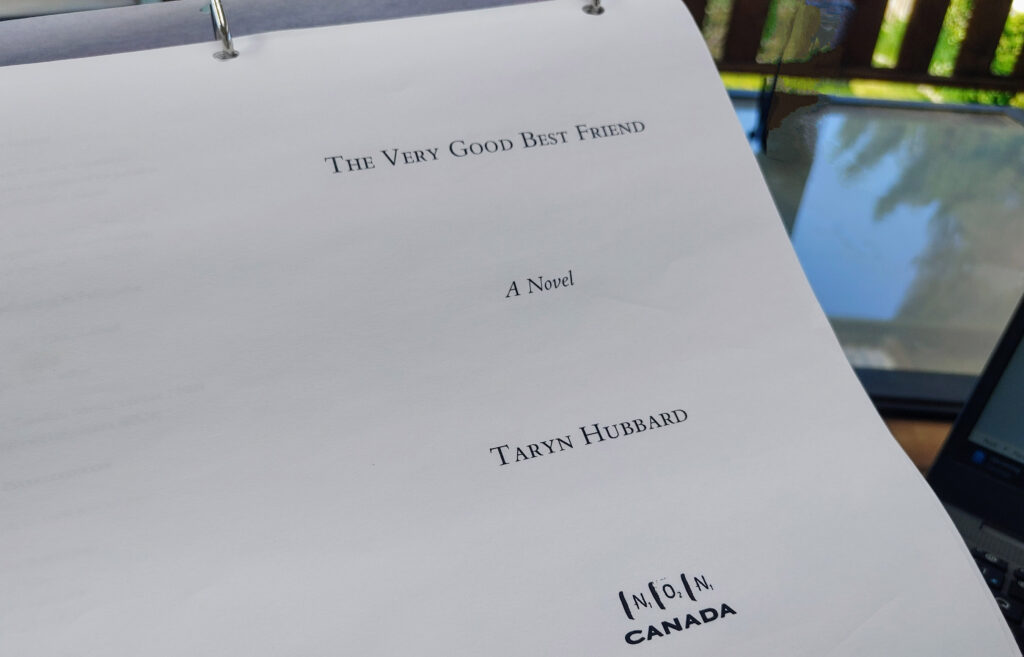
Galley proof for The Very Good Best Friend forthcoming from Now or Never Publishing in March 2025.
This month I have been proofreading the galley of my first novel, The Very Good Best Friend. I started writing it in August 2020, when I suppose a lot of people began writing their “one day” novels because it felt like it was now or never, the world showed us how fast it could change. Seven complete rewrites and several years later, and I’m here, now, with a book that will be printed and in the world next spring. I’m proud of myself for pursuing my dream, but it wasn’t easy. I’m also charmed by the fact that Now or Never Publishing were the folks who took it on!
There were definitely days where I wondered if working on a novel was worth the sacrifice of time. Since it’s not published yet, I guess I don’t know! My hope, as any writer’s hope is when they create something, is that I’ll find readers who will resonate with the themes of the book. More on those themes later.
An odd thing happens when pursuing a dream and then achieving it. I have an urge to do it all over again. For people who need to write, who love to read, who want to be in worlds of words, the process never ends. I don’t think it means the struggle of how to manage and spend time gets any easier. Who knows, maybe one day.